Context
This was part of a take-home assignment that helped me land me a role at Scotiabank. While the work leans more toward execution than classic product strategy, it reflects something just as important—how I think about shipping features in large organizations with lots of moving parts.
The Challenge
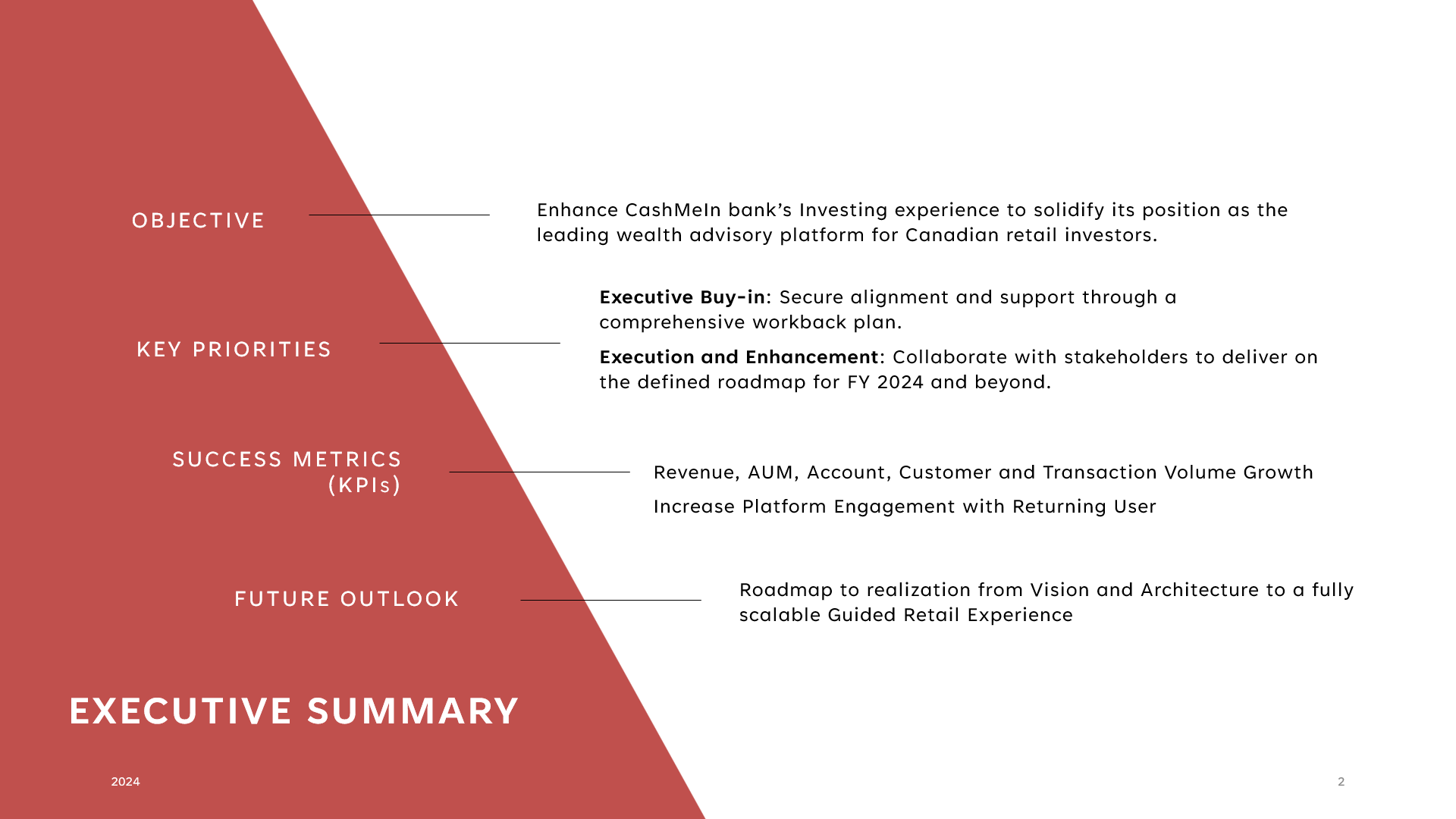
CashMeIn Bank (a fictional institution) wanted to improve its digital investing experience and solidify its position as a top retail wealth platform in Canada. The goal was to define how to prioritize and execute a set of features that would drive measurable growth in AUM, customer engagement, and transaction volume.
My Approach
Recognizing that strategic decisions often precede the work by many quarters (especially in large enterprises), I focused on execution and risk management:
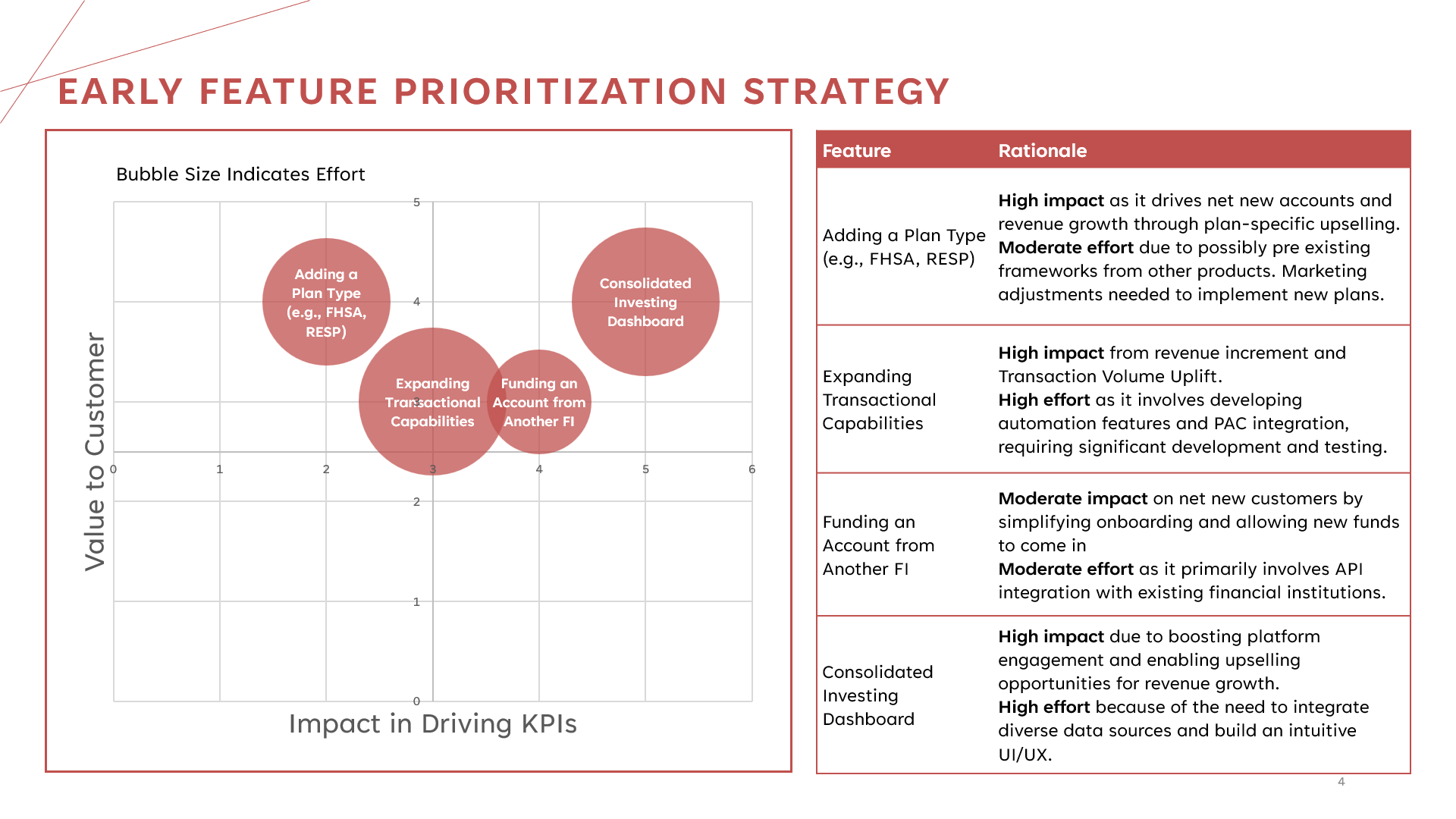
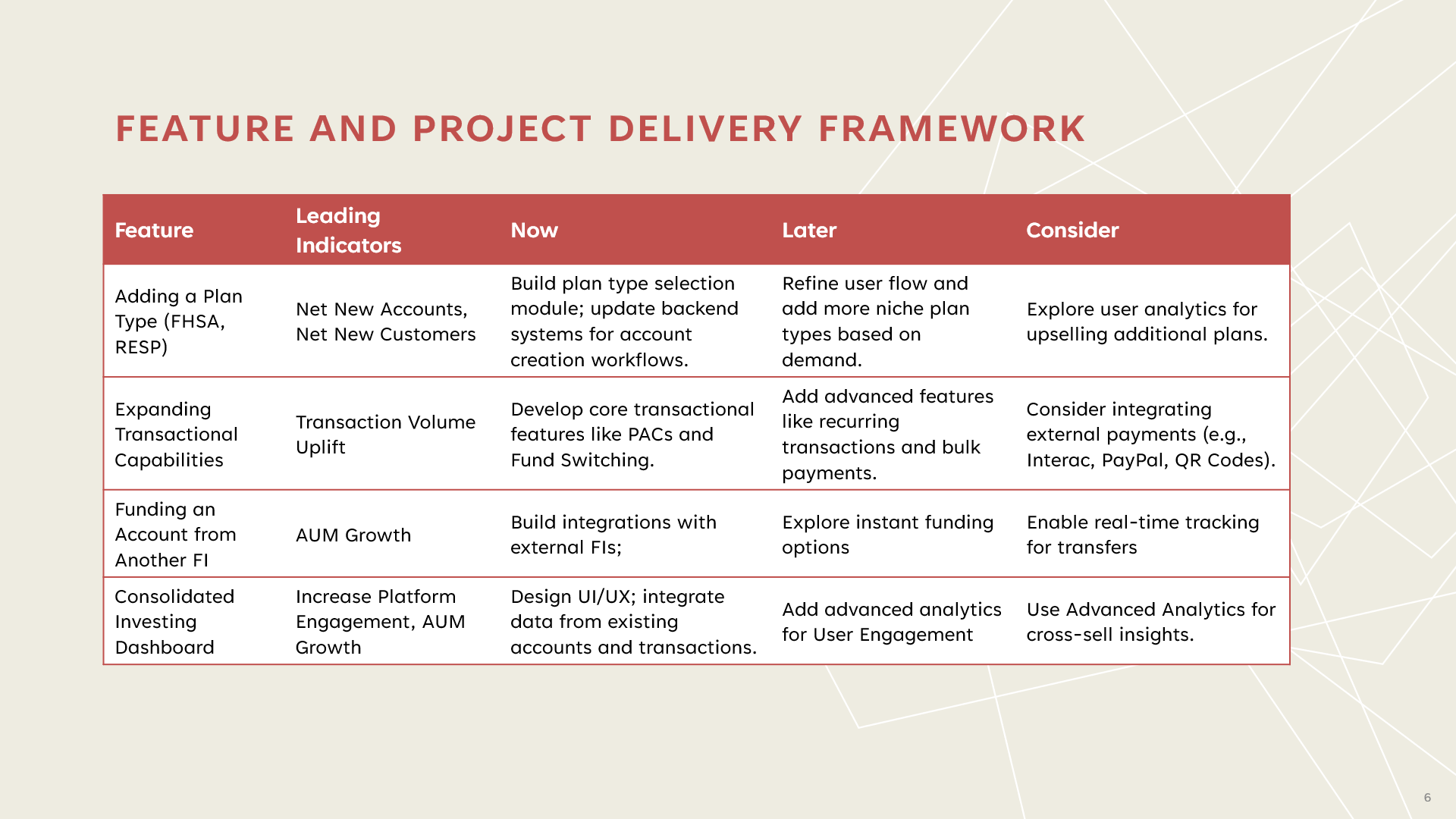
- Created a feature prioritization framework based on effort vs. impact and tied it to KPIs
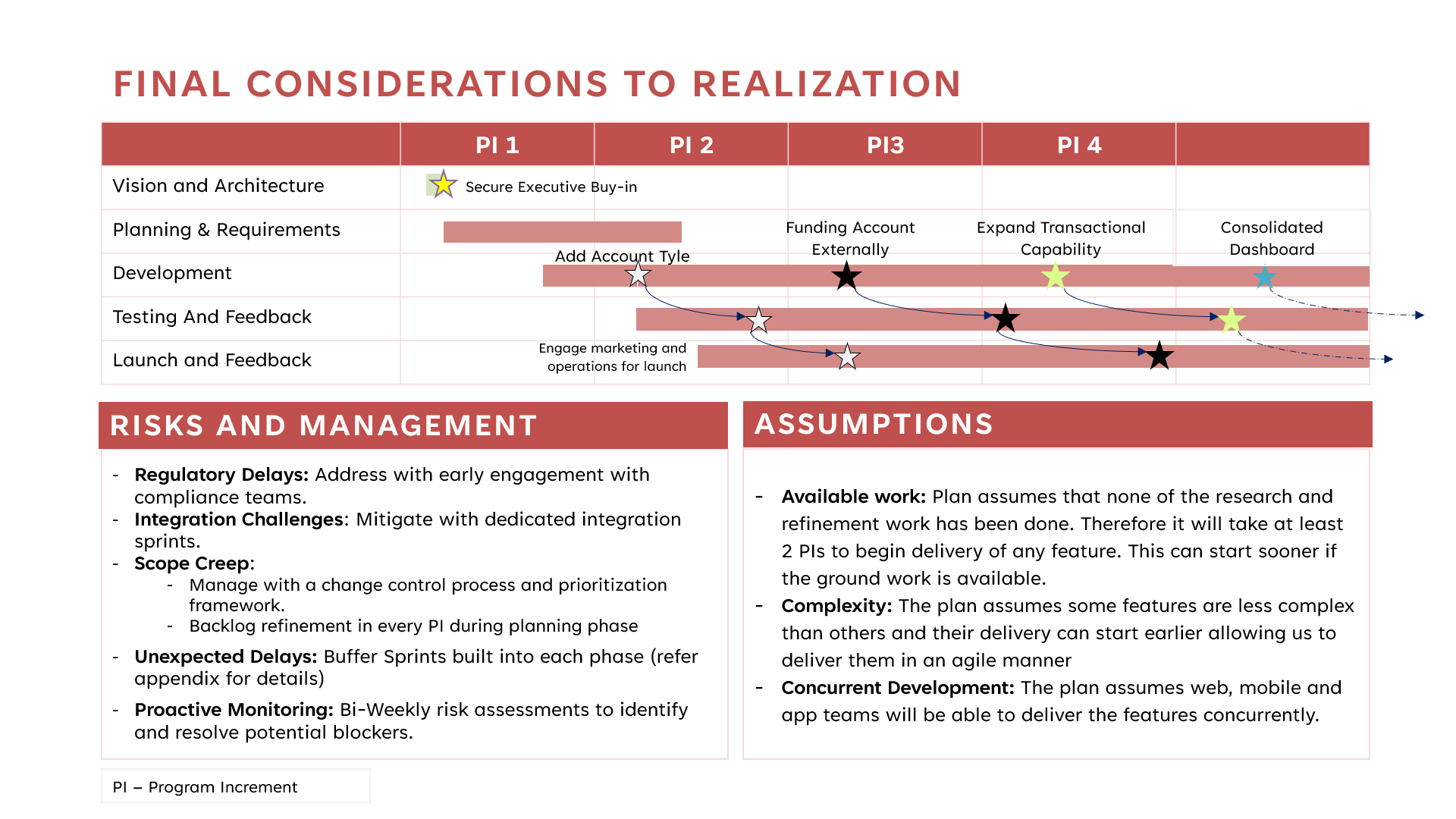
- Built a PI-level workback plan that included risk buffers and sprint pacing
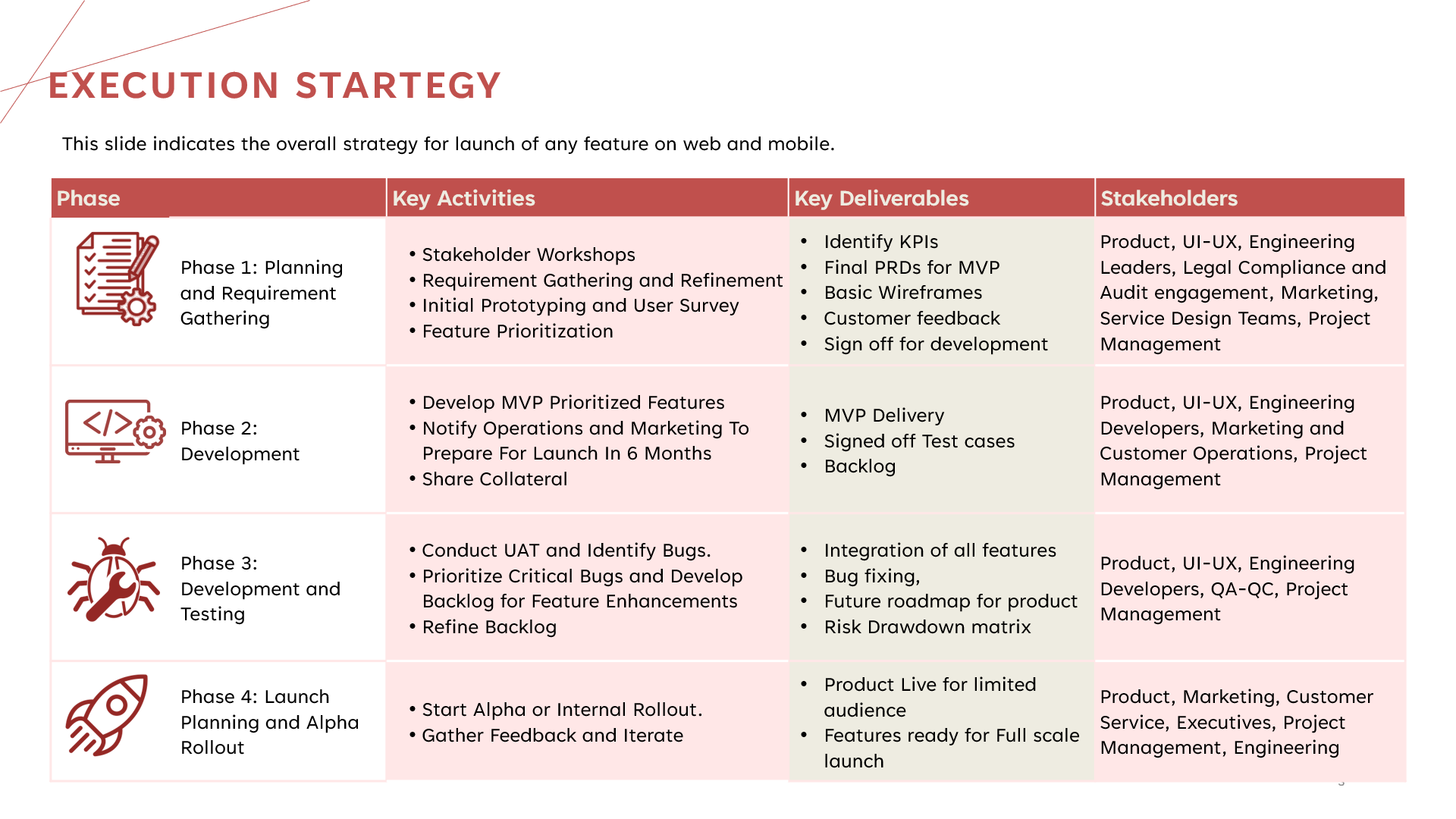
- Mapped out cross-functional responsibilities across product, engineering, UX, compliance, and marketing
- Proposed realistic sequencing across web and mobile platforms with assumptions clearly stated
- Integrated feedback loops through customer focus groups and stakeholder workshops
What I’m Proud Of
- Took a pragmatic lens: acknowledged unknowns and built in contingencies (e.g., regulatory blockers, scope creep)
- Maintained clarity and transparency: used simple visual structures and direct communication strategies to build trust
- Showed how I would lead with influence, not authority, by aligning multiple teams without stepping into any one domain too deeply
Reflections
Yes, I love doing strategy work—but this was a reminder that execution is its own kind of strategy. Knowing when to follow a plan, when to adjust, and how to keep a diverse set of stakeholders moving in the same direction is a muscle I value deeply.