For this paper, I began by doing a quick network analysis exercise, listing about 21 people who came to mind in the 10 minutes I had. Here’s how the stats looked:
- Total people: 21
- Density: 0.35
- Very close relationships: 5
- Gender: Female
- Nationality: Asia
- Last job before business school: Small firm / Entrepreneurial
This was a solid starting point, but it wasn’t comprehensive. To expand the analysis, I downloaded my LinkedIn data, which provided fields like Name, Company, Position, and Date Connected. I enriched this dataset by manually adding Gender (to the best of my knowledge, using Male and Female), Location, and “Where I know them from” (e.g., undergrad, master’s, internships like Bell, or companies I worked at—FreshMonk, TeamIndus, and TCS).
While categorizing the “Where I know them from” field, I realized that around 163 contacts were current Rotman students—skewing the dataset significantly. To avoid bias, I excluded these contacts from the rest of the analysis. What my network looks like
Total Contacts: 928, Female Ratio: 33%
Network Growth
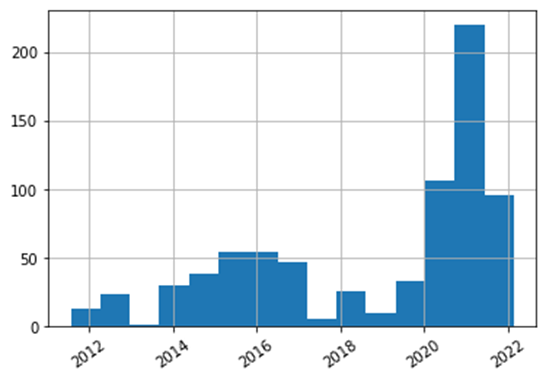
As of 2022, I had been building my professional network for about 10 years—though mostly without much structure or strategic focus. The biggest spike came in 2021, when I actively started looking for an internship..
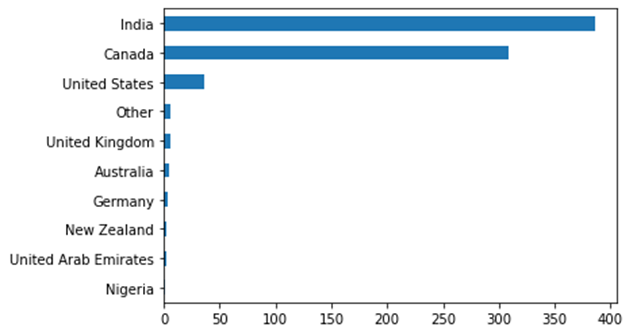
Location bias
As of 2022, I had been building my professional network for about 10 years—though mostly without much structure or strategic focus. The biggest spike came in 2021, when I actively started looking for an internship.
Positions Held
At the time (and even today), I was strongly leaning into a career in product management, which explains the large number of Product Managers in my network. The other major group was made up of Founders, Co-founders, and CEOs—likely a reflection in the startup ecosystem. .
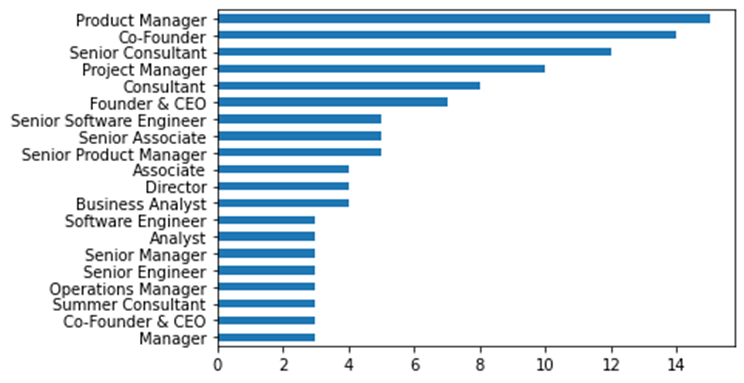
That said, one key realization in 2022 was that I needed to start engaging with professionals a few levels above the roles I was targeting. This became a priority area for me moving forward.
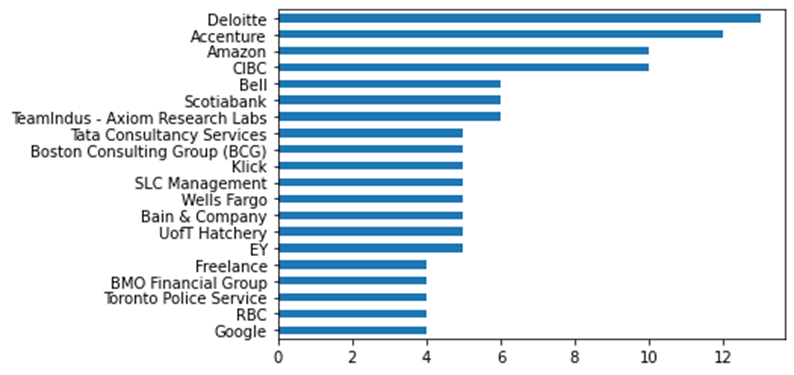
Top companies
Where do I know them from?
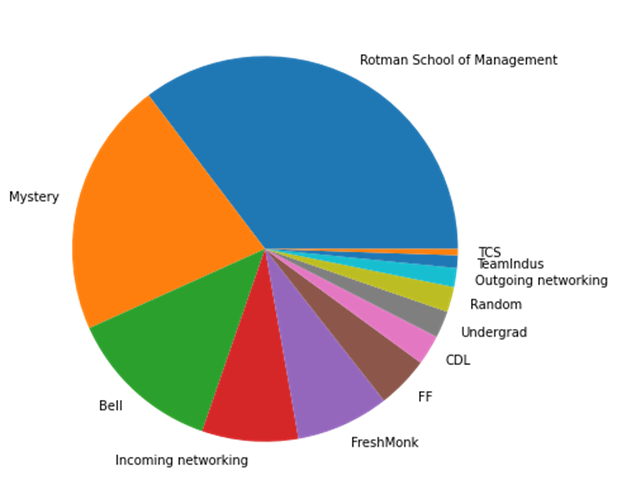
In 2022, the largest part of my network came from the Rotman School of Management—even after removing current students. This group included alumni, professors, and Morning/Evening MBA peers. It was a clear example of how powerful MBA networks can be. Many of my classmates, who weren’t even active in my network at the time, were poised to step into influential roles in the coming years.
Interestingly, I came across a small portion of people I couldn’t place. That group remained a mystery and was probably a sign that my LinkedIn needed a cleanup.
One surprising insight from this exercise was that incoming connection requests far outpaced my own outbound networking. It became clear that I’d been doing more “networking in my head” than actually reaching out. That realization prompted me to think more intentionally about building and maintaining professional relationships.
I also expected my undergrad connections to form a larger portion of the network. But by 2022, they were about the same size as the friends-and-family group. In hindsight, this made sense—I wasn’t particularly focused on networking during my undergrad years, and a lot of time had passed since then.
The rest of the network came from internships and previous jobs, which felt like a sensible reflection of my career up to that point.
Professional Goals
By 2022, I had been working toward a career in product management within the tech industry for over six years. I believed that an MBA would be a critical step toward that goal—and in the long term, I aspired to lead innovation-focused teams at the VP or C-suite level.
Rotman, however, has traditionally had a strong focus on finance and consulting. Given this reality, I saw two key strategic shifts I needed to make:
-
Expand my network to include more senior product leaders
I needed to proactively connect with Product Directors, Group PMs, and Heads of Product. These individuals are not only decision-makers in hiring processes, but their guidance and sponsorship would become even more valuable as I worked toward more senior roles in the future.
-
Recast my career strategy to align with Rotman’s strongest networks
Until then, I had deliberately avoided banking roles—primarily because of my interest in technology and the perception (shared by many PMs in Canada) that banks weren’t ideal starting points for product management careers.
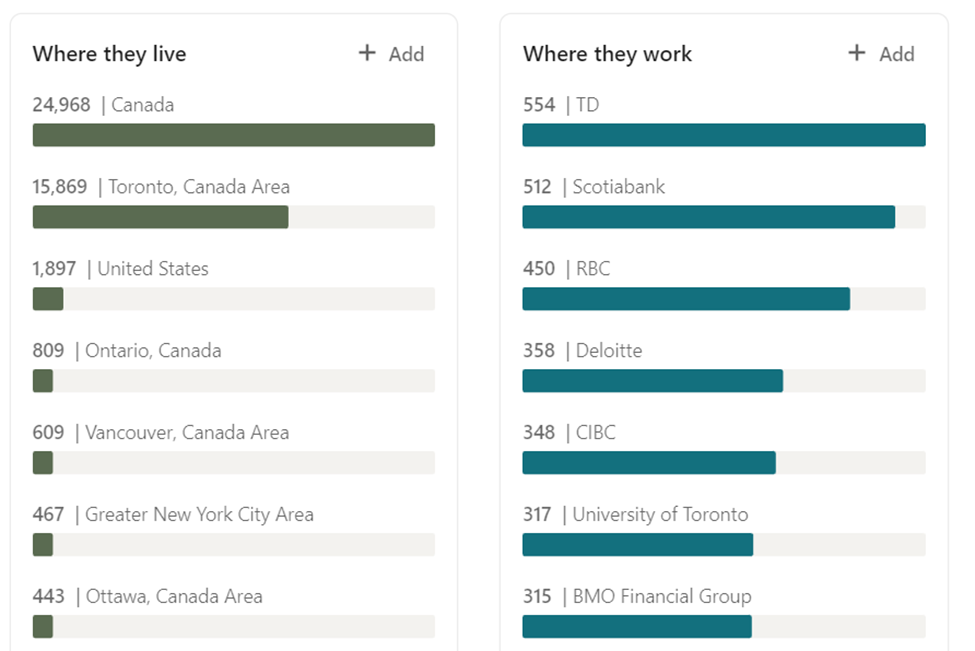
However, LinkedIn data showed that a large portion of Rotman alumni were working in banks. I began to reconsider this stance. Starting in a bank’s technology or innovation team could actually be a great stepping stone into fintech product roles—an area that, in many ways, bridges my interests in tech and financial services more meaningfully than “pure tech” alone.
Consulting was another logical entry point into product roles. However, despite multiple attempts, I hadn’t broken into consulting by that point. My takeaway here was similar: I needed to strengthen my network by connecting with people at least a couple of levels above my current targets. This would give me a better shot at navigating both entry and future transitions more effectively.
Final Comments
Up to this point in 2022, my networking had largely been unstructured, shaped more by proximity and environment than by intentional planning. As I approached key recruiting timelines, I realized the importance of taking greater control and being more strategic in my outreach.
I planned to build an Excel tracker with a list of target connections and commit to sending 5 to 10 messages every Monday, with follow-ups on Thursday. I knew that many messages might go unanswered, but my goal was to build meaningful conversations with those who did respond.
As the job search intensified, I also had to acknowledge a difficult reality: I was growing increasingly eager to secure a strong opportunity. This made it even more important to resist the urge to immediately ask for a job or referral. Instead, I aimed to keep my outreach comfortable and focused on seeking advice or introductions where appropriate.
In addition to LinkedIn, I began relying more on my friends and family network. Previously, I would reconnect with people through casual conversations but hesitate to make a clear ask. I now realize that this hesitation, likely shaped by cultural norms around not wanting to impose, was not effective. Going forward, I planned to be more transparent and timely with my requests, especially when reaching out to people I already had a foundation of trust with.